

Last Update: 10 September 2026

A few too many snack foods or fizzy drinks can make those riding pants feel tighter fast. To prevent bloating on your motorcycle ride and stay comfortable for the kilometres ahead, choose foods that are easier on your digestive system and avoid the common triggers that can leave you feeling uncomfortable in the saddle.
What’s The Scoop On Bloating?
“Bloating” is that uncomfortable feeling of fullness, pressure or swelling in your abdomen, often caused by a build-up of gas in the digestive tract. Certain foods and drinks can increase gas during digestion, while swallowed air and fluid retention can add to that uncomfortable, tight feeling. Add hours in the saddle, a snug waistband and a bumpy road, and even mild bloating can quickly become a real distraction.
Bloating vs. Water Retention
Intestinal bloating is often gas-related, creating a feeling of fullness, tightness, pressure or cramping in the abdomen.
Water retention is different. It occurs when excess fluid builds up in the body’s tissues and may appear as puffiness or swelling, particularly in the hands, feet and ankles — something riders may notice after long periods in the saddle.
Common food triggers: Dairy, certain legumes, some fruits, carbonated drinks, and salty or ultra-processed snacks can contribute to bloating or fluid retention in some people. High-FODMAP foods can also be a culprit. FODMAPs are certain carbohydrates that may be poorly absorbed in the gut, where they can draw in water and be fermented by bacteria, producing gas, pressure and discomfort.
The good news? Just as some foods can leave you feeling uncomfortable, others are easier on the digestive system and can help prevent bloating on a motorcycle ride, keeping you comfortable and focused on the road ahead.
Asparagus — A Smart Pre-Ride Pick

Asparagus contains plenty of water and potassium, making it a nutritious choice when you’re trying to avoid that heavy, puffy feeling before a ride. It also contains prebiotic fibre, including inulin, which supports healthy gut bacteria and digestive health over time.
There is a catch: asparagus can cause gas or bloating in some people because it contains fermentable carbohydrates (FODMAPs). If you already know asparagus agrees with your digestive system, it can still make a light and nutritious addition to a pre-ride meal.
Rider tip: Keep the portion modest and prepare it simply. Lightly steamed or grilled asparagus paired with eggs makes an easy pre-ride meal without loading up on heavy, greasy foods.
Bananas — Potassium Power, Gentle on the Gut

Bananas are an easy pre-ride choice. They’re a good source of potassium, an important electrolyte that helps regulate fluid balance and counter the effects of a high-sodium diet. They also provide fibre to support healthy digestion and regularity — helpful when you want to avoid that heavy, bloated feeling before getting in the saddle.
Rider tip: If you’re sensitive to FODMAPs, choose a firmer, just-ripe banana rather than an overripe one. Pair it with a few almonds or a spoonful of peanut butter for a little protein and longer-lasting energy.
Other good options with similar benefits:
- Kiwi — provides fibre and may help support regularity.
- Oranges — hydrating, potassium-rich and easy to pack for a rest stop.
- Avocado — rich in potassium and healthy fats, but keep portions modest if you’re sensitive to FODMAPs.
Feeling full and heavy isn’t nice when you’re not riding your motorcycle, but it’s even worse when you’re on the road – especially when there’s many more kilometres to go.
Cucumber — Hydrating and Light
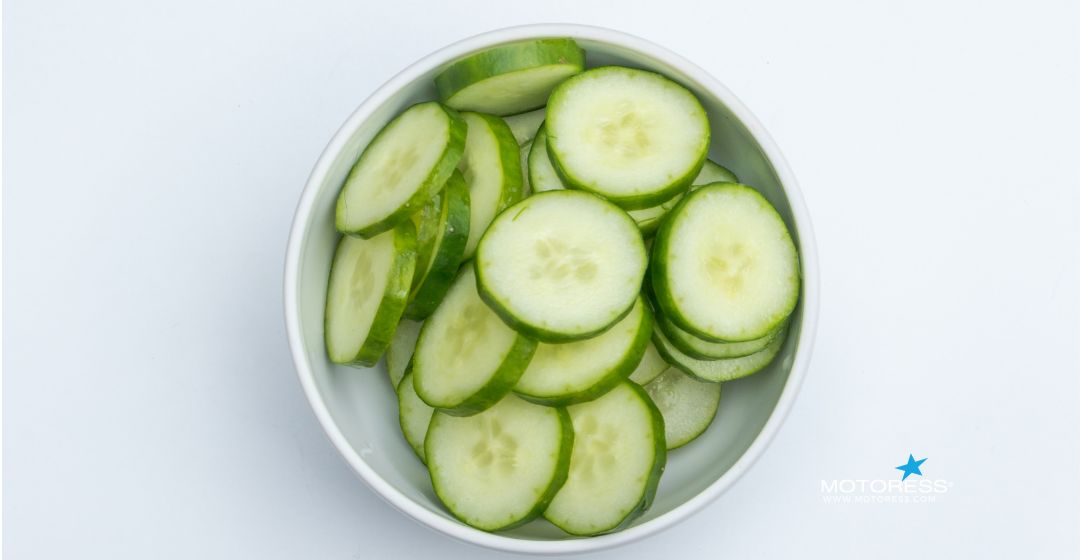
Cucumber is about 95% water, making it a light, refreshing way to add to your fluid intake without leaving you feeling overly full, a plus before or during a motorcycle ride. It’s also naturally low in calories and generally low-FODMAP in typical portions, making it a good choice for riders with sensitive digestion.
Its combination of high water content and a little potassium can also support normal fluid balance, particularly when you’re avoiding the salty, ultra-processed foods that often find their way into road-trip stops.
Rider tip: Slice cucumber with a squeeze of lemon for an easy pre-ride side, or add it to a small Greek-style salad. If dairy tends to leave you bloated, choose a lactose-free option. For the road, keep sliced cucumber chilled in a small insulated bag until you’re ready to eat it.
Fennel Seeds — A Traditional Digestive Helper

Fennel seeds have long been used as a carminative, a term for herbs traditionally used to help ease gas and digestive discomfort. Their distinctive aromatic oils, including anethole, are thought to contribute to fennel’s digestive effects, which is why the seeds are commonly chewed after meals or steeped into tea.
What’s a carminative? Herbs such as fennel and peppermint that have traditionally been used to help ease gas and digestive discomfort.
“Carminatives are herbs like fennel and peppermint that relax the gut and help release trapped gas, easing bloat.”
Easy Ways to Use Fennel
- Chew: Try ½–1 teaspoon of fennel seeds after a meal.
- Make tea: Lightly crush 1 teaspoon of seeds and steep in hot water for 5–10 minutes.
- Add to food: Toast and sprinkle over salads, rice or eggs for a mild liquorice-like flavour.
Rider tip: Fennel seeds are tiny and travel well, making them easy to carry on longer rides. Start with a small amount and, as with any unfamiliar food, find out how your digestive system responds before relying on it on ride day.
Ginger — Digestion and Nausea Support

Ginger is a well-known digestive aid. Its active compounds, including gingerol’s and shogaols, may support stomach motility and help food move through the digestive system more efficiently. It’s also well studied for helping to ease nausea, useful if a long or winding ride occasionally leaves your stomach feeling unsettled.
Easy Ways to Use Ginger
- Tea: Steep 4–6 thin slices of fresh ginger (or ½ teaspoon grated) in hot water for 5–10 minutes. Sip warm or let it cool.
- Quick chew: Try a small piece of crystallised ginger or a ginger lozenge — but check the added sugar.
- With meals: Grate fresh ginger into rice, stir-fries, soups or a light omelette.
- Before riding: Keep the serving small and give your stomach some time to settle before gearing up.
Rider tip: If you’re prone to heartburn or reflux, concentrated or spicy ginger may aggravate symptoms. And as with any pre-ride food, try it at home first rather than experimenting on the road.
Probiotic Yogurt — Live Cultures for Gut Health

Yogurt with live cultures can support a healthy gut microbiome and digestion. Certain probiotic cultures, including strains of Lactobacillus and Bifidobacterium, may also help with regularity and digestive comfort over time. If yogurt already agrees with you, it can make a light, convenient pre-ride meal or snack.
How to Choose — and Enjoy
- Look for: “live and active cultures,” with little or no added sugar. Choose lactose-free if regular dairy tends to leave you bloated.
- Keep it moderate: Around ¾–1 cup (175–250 g) is plenty for a pre-ride snack.
Add some staying power: Pair with kiwi or blueberries and a small handful of almonds or walnuts. - Watch the extras: Sugar alcohols such as sorbitol and xylitol, along with large amounts of dried fruit or high-fibre granola, can trigger bloating in some people.
Dairy-Sensitive Alternatives
Try lactose-free yogurt, a small serving of kefyr, or a cultured plant-based yogurt containing live cultures. Check the label for added sugars and ingredients you already know can upset your stomach.
Rider tip: Enjoy yogurt early enough that you know it has settled comfortably before you gear up. Most importantly, stick with a type and portion you already know works for you . . . ride day isn’t the time to test a new probiotic product.
Quick Wrap-Up for the Road
Before you gear up, go easy on common bloat triggers such as fizzy drinks, onion or garlic-heavy meals, very salty snacks and oversized portions. Instead, choose familiar foods that sit well with you such as bananas, cucumber, ginger, fennel or probiotic yogurt. Asparagus can also be a nutritious choice if you know your digestive system tolerates it.
On tour, keep it simple. Scan menus and rest-stop options for lighter foods, stay hydrated and keep portions comfortable. Most importantly, know what works for your gut before ride day. Feeling comfortable in the saddle means one less distraction and more energy to enjoy the kilometres ahead!