
Last Update: 24 December 2025

You’ve finished your rider training and you’re ready to buy. This 2026 guide highlights beginner-friendly motorcycles for your everyday needs, explains fit (inseam vs. seat height), and adds rider-fit notes so your first bike feels natural from day one.
How to Choose Your Motorcycle
Prioritise fit, control, and intent over headline specs.
- Fit and reach: If you can comfortably plant a foot at stops, everything gets easier. Seat height, seat width, and the bike’s centre of mass all matter.
- Manageable power/weight: For gas bikes (ICE – internal combustion engine), a common beginner sweet spot is ~250–500 cc with predictable fuelling. Tuning matters more than the number.
- Neutral ergonomics: Upright “standard” positions reduce fatigue and help slow-speed control.
- Brakes & aids: Prioritise ABS. A slipper clutch, E-Clutch/auto-clutch, and simple ride modes make life easier — but deliberate braking practice matters most.
- Budget & insurance: Think total cost (service, tires, fuel/charging, insurance) and resale.
- Try before you buy: Sit the bike in riding or street shoes. Narrower seats and balanced weight can make a “taller” spec feel fine.
Quick Picks by Use-Case
| YOUR MAIN USE | TOP FEATURES | RECOMMENDED CATEGORIES |
| Daily city / commute | Neutral posture, easy steering, light weight | Standard / Naked (e.g., 300–500 class) |
| Weekend rides / light touring | Stability + comfort, mild wind protection | Standard or Small ADV |
| Relaxed vibe / low seat | Confidence at stops, easygoing torque | Cruiser (beginner-friendly, low seat options) |
| Bumpy roads / light gravel | Upright stance, more suspension travel | Small ADV / Dual-Sport |
| Fairings + sporty look | Wind shelter, moderate lean, still approachable | Lightweight Sport |
Sizing Guide: Inseam ≈ Seat Height
| Rider inseam* | Target seat height (approx.) |
| < 30 in (≈ 76 cm) | 26–28 in (≈ 66–71 cm), up to ~30 in if the seat is narrow |
| 30–32 in (≈ 76–81 cm) | 28–30 in (≈ 71–76 cm) |
| 32–34 in (≈ 81–86 cm) | 30–31.5 in (≈ 76–80 cm) |
| 34 in+ (≈ 86 cm+) | 31–32 in+ (≈ 80–83 cm+) |
*Inseam is floor-to-crotch. Seat width and low centre of mass can make a “taller” number feel lower — sit on the bike to be sure. Many models offer low/adjustable seats.
The Best Beginner Motorcycles of 2026 (By Category)
Specs and availability vary by market and can change during the year. Treat these as shortlist examples and verify current seat height/weight locally. Where possible, try the low-seat option in the dealership showroom.
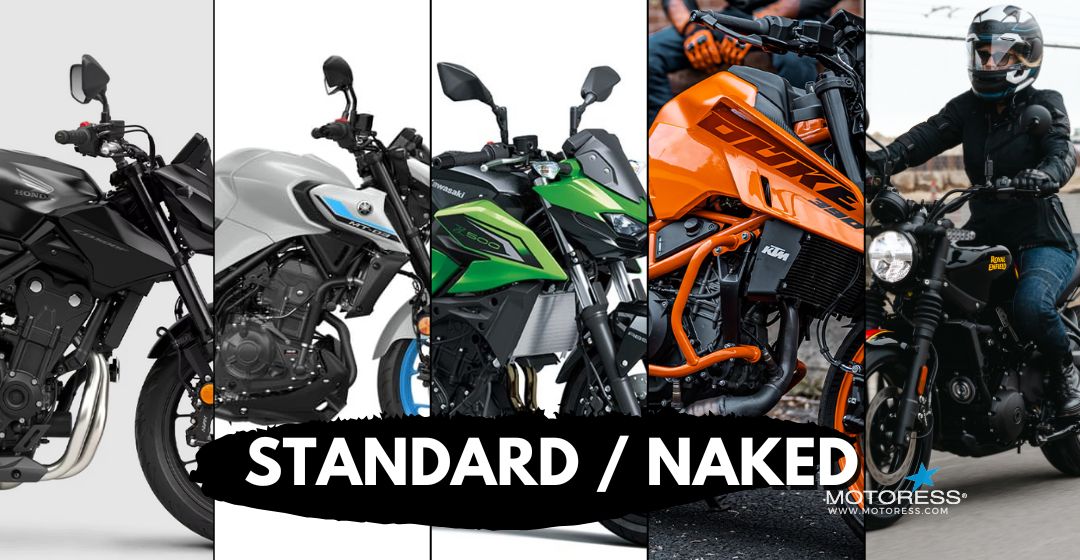
1. Standard / Naked (the great all-round starter)
Neutral ergonomics, easy slow-speed work, commuter-friendly.
- Kawasaki Z500 / Z400 series — light, neutral, forgiving for city miles.
- Yamaha MT-03 — featherweight + friendly throttle; easy to park and U-turn.
- KTM 390 Duke (new-gen) — sharp chassis feel, strong brakes/electronics in a small package.
- Honda CB500F / NX500 (standard) — planted stability, smooth twin; scales with you.
- Royal Enfield Guerrilla 450 — nimble, torque-rich single with approachable ergonomics and great value.
Rider-fit notes: Standard motorcycles often publish ~30–32 in seat heights, but seat narrowness and balance are what you feel. Riders with shorter inseams ask about low-seat/adjustable seat options.

2. Lightweight Sport (for fairings without punishment)
Wind protection, modest lean, still approachable for learners.
- Kawasaki Ninja 500 / 400 series — upright-ish for a sportbike, very beginner-friendly.
- Yamaha YZF-R3 — polished chassis that grows with track-day ambitions.
- Honda CBR500R — stable and usable daily; often a “keeper” past year one.
Rider-fit notes: Slight forward lean—check wrist comfort during a slow parking-lot loop or while sitting stationary.
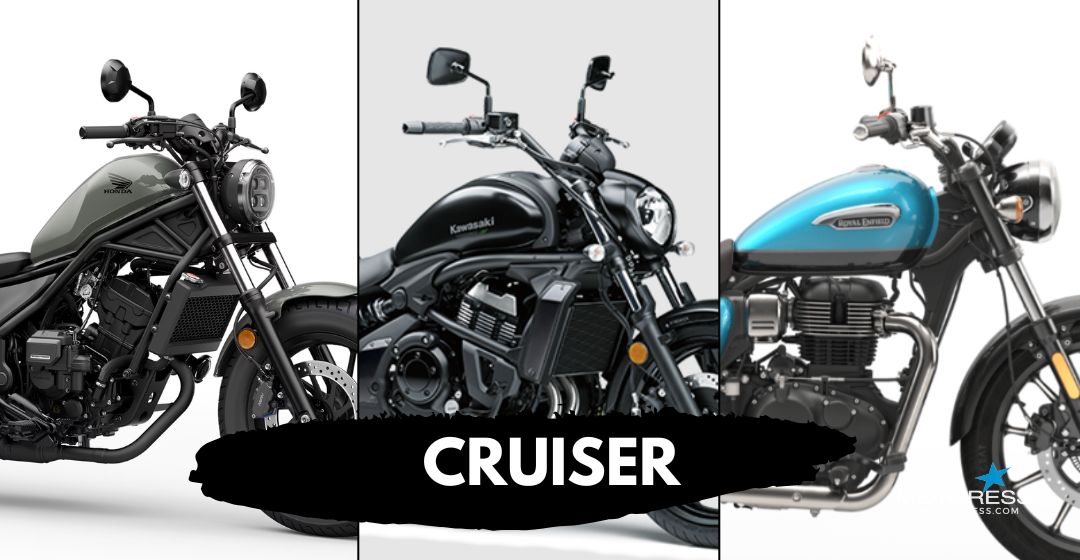
3. Cruiser (low seats, relaxed ergos)
Approachable at stops; great confidence for shorter inseams.
- Honda Rebel 300 / 500 (E-Clutch where available) — super-low seat; auto-clutch trims stall anxiety.
- Kawasaki Vulcan S (ERGO-FIT) — pegs/seat/controls adjust to you.
- Royal Enfield Meteor 350 — easygoing torque with classic ergonomics.
Rider-fit notes: Many cruisers sit ~27–29 in; check how the bike balances at parking-lot speeds, not just the spec.
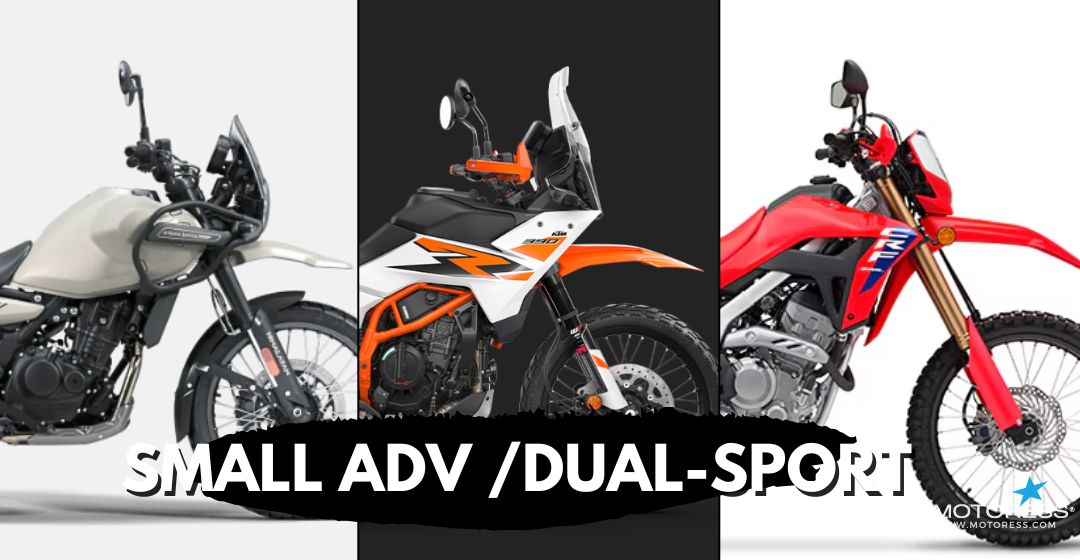
4. Small ADV /Dual-Sport (bad roads, light gravel curiosity)
Upright stance, more travel for rough pavement, gear-carrying friendly.
- Royal Enfield Himalayan 450 (new-gen) — manageable power, adjustable seat, long-ride comfort.
- KTM 390 Adventure — electronics and suspension in a compact, highway-capable package.
- Honda CRF300L (dual-sport) — true dirt-technique trainer; consider low seat/lowering if shorter.
Rider-fit notes: ADV/dual-sport tends to be taller. If your inseam is under ~31 in, try low seats or lowering and test reach.
EV Note (Urban Commuters)
Electric learners should focus on weight, throttle / regen smoothness (“Regen smoothness” = how predictable and progressive an electric bike’s regenerative braking feels) , and low speed feel over headline kW/horsepower. Smooth ramp = confidence.
Fit & Confidence: Your First Test Ride
- Flat-foot check: In riding boots or flat shoes, can you confidently plant at least one foot?
- Bar reach: No shoulder hunching; elbows relaxed.
- Friction-zone / slow control: Practice walking-pace turns in a quiet lot. (With E-Clutch/auto-clutch, focus on rear-brake finesse and smooth roll-on.)
- Tight U-turns: If it’s easy in a parking lot, real roads feel easier.
Licencing
New riders often start under learner/novice licencing with extra restrictions (examples may include: zero alcohol, passenger limits, night/highway restrictions, or approved “beginner bike” lists). Names and rules vary by country/state. Before you buy, check your local licencing authority for:
- Which bikes are eligible at your stage.
- Any power/weight limits or approved lists.
- Training options that can shorten your graduated timeline.
Bottom line: Pick a bike that meets your local learner rules and supports your skills growth — then practice slow-speed control early and often.
Methodology — Why These Bikes Made The List
The motorcycles made the list as they focused on beginner-friendly bikes that are genuinely practical to own and ride:
- Current + findable: Models widely available in 2026.
- Easy to control: Manageable power/weight with smooth throttle and neutral, upright ergonomics.
- Fit for more riders: Sensible seat heights and, where possible, low/adjustable seat options.
- Affordable to keep: Reasonable running costs, parts/dealer access, and active owner communities.
- Organised by use: Grouped recommendations by how you plan to ride (city, weekend, cruiser comfort, light ADV) to make shortlisting straightforward.
FAQs
Is 500 cc too much for my first bike?
Not automatically. It’s about tune and weight. Some 500s are incredibly beginner-friendly, while some 300s can feel abrupt. Sit, test-ride, and feel the low-speed control.
Do I need ABS?
Yes. Today’s ABS significantly cuts lock-up risk in panic or slick conditions. Prioritise smooth, progressive braking skills — ABS is backup, not a substitute.
How important is seat height?
Very. It’s both literal reach and psychological confidence. Narrow seats and low centre of gravity can make a “taller” number feel fine — sit on the bike to be sure.
What about starting on a used bike?
Great idea for budget and insurance. Ensure it’s mechanically sound, with fresh tires, good brakes, and a straight handlebar — then take a parking-lot shake-down before longer rides. Read more about buying a used motorcycle.
Shortlist two or three contenders, sit on each in street shoes, check ground reach and control feel, then do some slow-speed practice in the lot. Confirm your local licence requirements, choose the bike that feels right and supports your riding lifestyle, gear up, and roll into your riding season with confidence!