

Last Update: 15 October 2025

Gears are essential to a motorcycle’s final drive system, but how exactly do they work? Final drive gearing, or simply “gears,” are found in a wide range of mechanical devices, not just motorcycles. From car engines to household items like your old VCR, wind-up grandfather clocks, and even the power meter outside your home, gears are everywhere. In fact, any machine with moving parts likely relies on gears to transfer power. And in the case of motorcycles, gears play a critical role in translating engine power into motion, ensuring smooth and efficient performance.
Understanding Your Motorcycle Transmission
Your motorcycle’s engine can create an enormous amount of power, but that power needs to be delivered to the wheels in a controlled manner. The motorcycle transmission delivers power to the rear wheel through a series of structures that include the gears or gear set (usually one gear down and five up), the clutch and the drive system. This is where the transmission comes in. The transmission connects the engine to the rear wheel through a system that includes the gears (often one down, five up), the clutch, and the drive mechanism. The clutch is crucial because while your clutch is always spinning, your motorcycle’s wheels are not. To prevent the engine from stalling when the bike stops, the clutch disengages the engine from the wheels. It allows for a smooth connection between the spinning engine and the non-spinning transmission, ensuring seamless power delivery and control.

The clutch’s primary role is to engage and disengage the engine’s power from the crankshaft to the transmission. Without it, the only way to stop the wheels from turning would be to turn off the engine—an impractical solution for any motorised vehicle. The clutch consists of a series of spring-loaded plates that, when pressed together, connect the transmission to the crankshaft. When a rider shifts gears, the clutch disconnects the transmission from the crankshaft, allowing for a smooth gear change. Once the new gear is selected, releasing the clutch re-establishes the connection, ensuring seamless power transfer.
Gear Set
A gear set is just what it sounds like—a set of gears that allows a rider to transition from a complete stop to cruising speed. Most motorcycle transmissions feature between four to six gears, though smaller bikes may have as few as two. The gears are engaged by shifting a lever, which in turn moves the shifting forks inside the transmission, enabling smooth gear changes and adjusting the bike’s speed as needed.
There are three basic ways to transmit engine power to the rear wheel of a motorcycle, either by a chain, belt or shaft—these are referred to as your ‘final drive” the thing that finally gets you driving/moving.

Chain Drive Is Most Popular
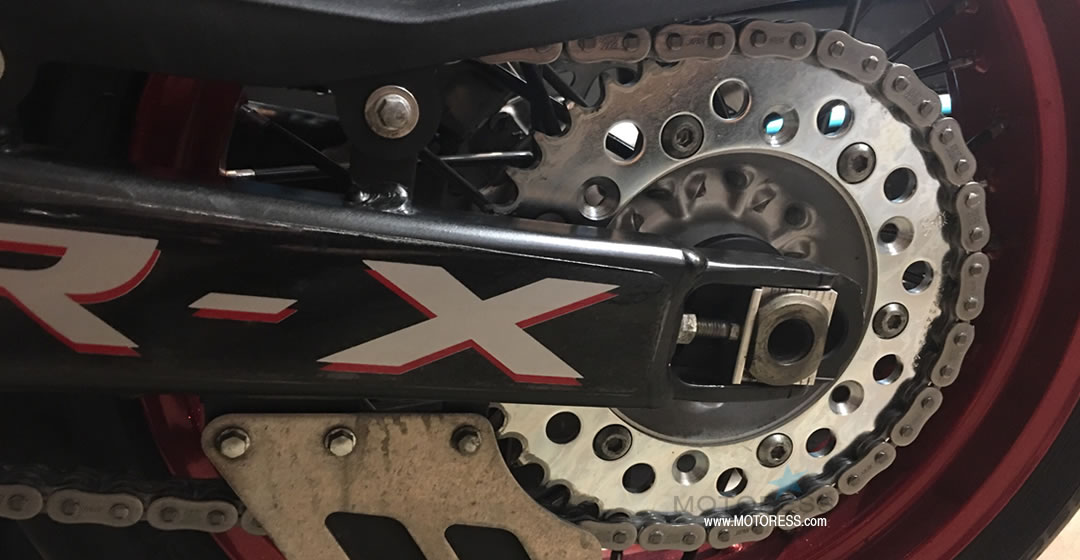
The chain drive is the most commonly used method for powering the rear wheel of a motorcycle. In this system, a sprocket attached to the transmission’s output shaft is connected to a sprocket on the rear wheel by a metal chain. As the transmission turns the smaller front sprocket, power is transferred along the chain to the larger rear sprocket, which rotates the rear wheel. While this system requires more maintenance —such as regular lubrication, adjustments, and eventual replacement of the chain and sprockets —it is the least expensive option for replacement compared to other final drive systems.
Belt Drive
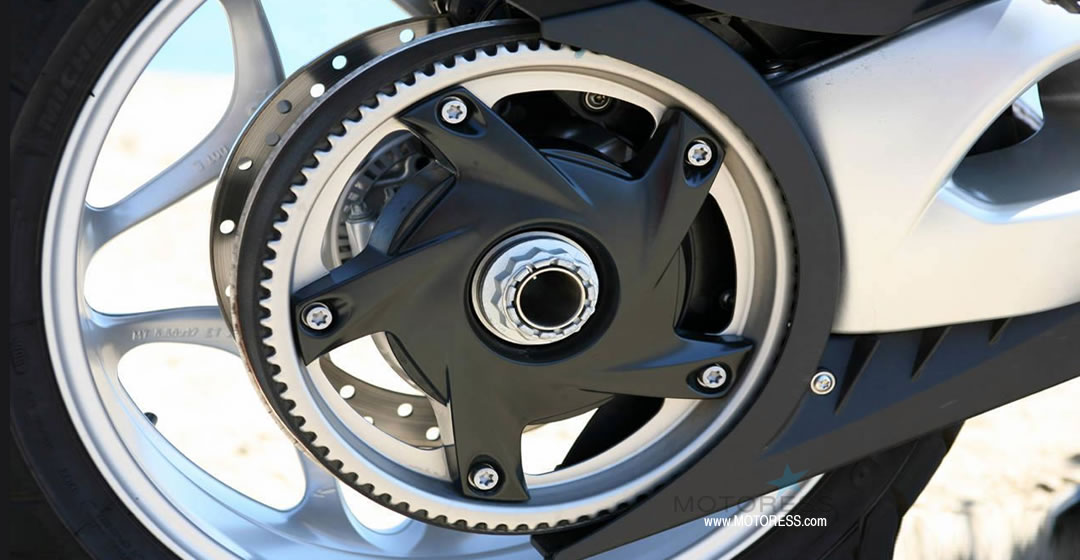
Belt drives are commonly used by manufacturers like Harley-Davidson, BMW, and Indian Motorcycles. These systems are almost maintenance-free and easy to care for, requiring no lubrication and only simple cleaning, such as hosing off or washing. In addition to being low-maintenance, belt drives operate with minimal noise, making them much quieter compared to chain drives. This combination of convenience and quiet operation makes belt drives an attractive option for many riders.
Shaft Drive

The shaft drive transmits power to the rear wheel through a driveshaft, much like a rear-wheel-drive car. The shaft and differential are typically sealed, with the differential bathed in oil or fluid, ensuring low maintenance. This system offers quiet, clean, and unobtrusive operation, making it an attractive option for riders seeking minimal upkeep and a smooth ride. Unlike chain drives, the shaft drive requires little attention, making it a highly durable and reliable final drive system.
In conclusion, a motorcycle’s final drive system — whether it’s chain, belt, or shaft—plays a crucial role in transferring the engine’s power to the rear wheel, each with its own set of advantages and maintenance requirements.
Understanding the differences between these systems can help you make informed decisions about your motorcycle’s performance and upkeep. Whether you prioritise affordability, low maintenance, or quiet operation, the right drive system will ensure a smoother, more enjoyable riding experience tailored to your needs.