Last Update: 15 October 2025
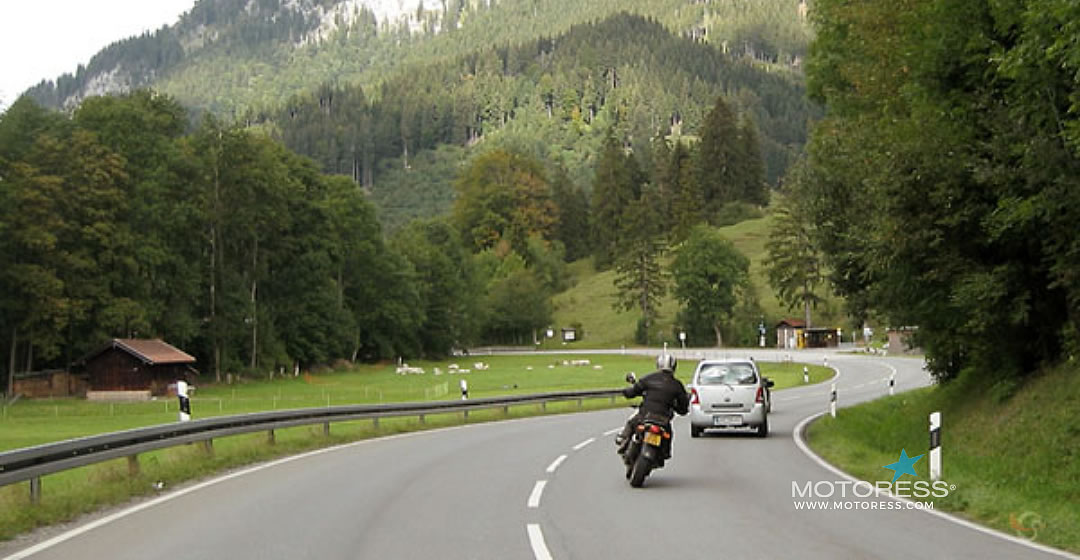
As a motorcyclist, you’ll often face situations like collision avoidance and obstacle avoidance, where you have only a split second to decide your course of action. Your decision must lead to a successful outcome. Whether you choose to brake, accelerate, or swerve —and in which direction — requires quick thinking and precise execution. Reflecting on your actions afterward, you might realise that your chosen option wasn’t the best. This hindsight is possible because, after the fact, you have the time, calm, and clarity of thought to evaluate the options – to weigh out the pros and cons. The result will be an informed decision achieved through the benefits of brain training while riding.
Panic Reflexes During Critical Moments
Can you prepare for these split-second decisions before they happen? Never completely, but in many cases, yes! Even when you have little time to react. Most riders are not well-practiced in this form of “fast thinking,” which often leads to a non-reactive response — doing nothing. Your reaction is guided by your “panic reflexes” (PRs), where you might tense up, become rigid, wide-eyed, freeze, and hope for the best. In these critical moments, your decisions can be a matter of life and death.
So, how can we prepare differently for potential dangers on the road? One crucial method is brain training! Mentally practising “outs” or proper manoeuvre sequences before they happen can help ensure the right action when operating in “panic mode.” By thinking about hypothetical situations and visualising the best solutions, you set the reaction in your brain in motion, creating an auto-response for future occurrences.
As motorcyclists, we need to do things differently in preparation for danger and one very important method is – brain training! The mental practise of “outs” or proper manoeuvre sequences in your mind, before they happen, can help ensure the right action when having to operate in “panic mode”.
You can create a number of dangerous but realistic scenarios you might encounter on your motorcycle. Be reasonable in this practice and focus on plausible, real-life situations.
Example of “Overtaking” or Passing a Vehicle
PASSING ON A TWO LANE HIGHWAY OR ROAD
When overtaking and passing the vehicle in front of you, two major dangers pose significant threats:
1. An oncoming vehicle suddenly appears and quickly approaches you as you use its lane to pass.
2. The vehicle you are overtaking unexpectedly moves to the left (where you are) or, even worse, turns left.
IN THE FIRST CASE (ONCOMING) THERE ARE TWO POSSIBLE SOLUTIONS:
1. Brake and return behind the vehicle you intended to pass.
2. Accelerate to pass the vehicle and return to your lane before encountering the oncoming vehicle.
Which option you choose will depend on your position when you see the oncoming vehicle, the time, space, and speed required to get back into your lane, and how close the oncoming traffic is.
You can practice this situation during normal passing maneuvers while riding. Consider at which points you would have enough time to brake and when braking might be too late. Also, identify when during your passing maneuver you would need to accelerate.
Even more importantly in this mindful training, you need to ensure that the risk in this situation is reduced or prevented. This involves being observant, watching the road ahead, and accounting for hidden oncoming traffic.
DEAD GROUND
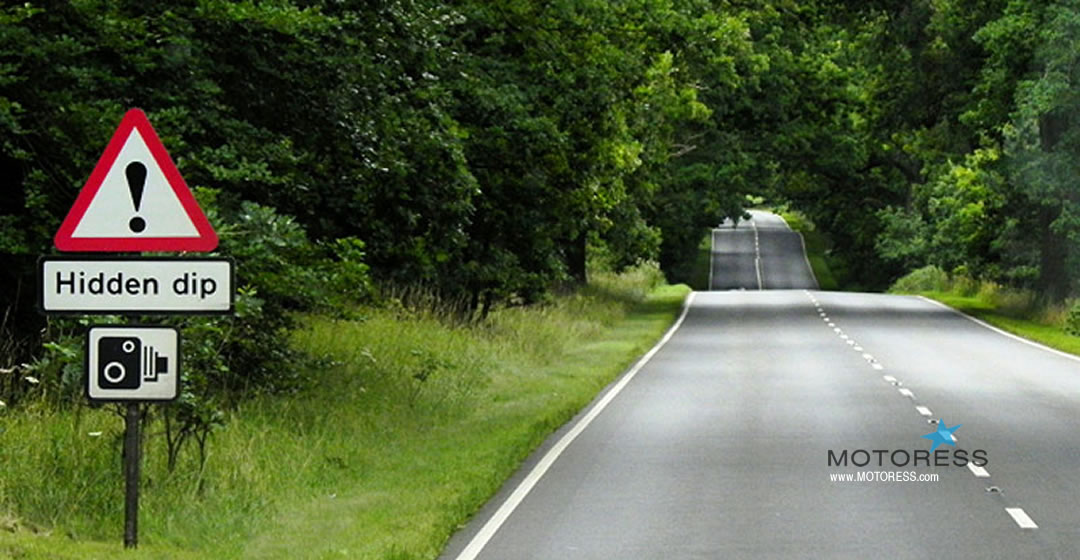
Especially in hilly or mountainous regions, one physical hazard that’s not easy to spot is something known as “Dead Ground.” This occurs when the road dips into a hollow, creating the illusion that there are no oncoming vehicles when, in fact, there are. Vehicles in this dip cannot be seen, so extra caution must be taken before overtaking to ensure no areas of dead ground are hiding oncoming traffic.
Overtaking” or Passing a Vehicle: Step by Step
To reduce your chances of encountering problems and to select the right solution when overtaking, always practice the following:
- Ensure the road beyond the vehicle you’re overtaking has enough clear space ahead.
- Maintain a safe distance behind the vehicle you plan to overtake—at least 7 metres/25 feet (on average 2-3 seconds followng distance). The exact distance depends on your speed; the higher the speed, the greater the required distance.
- Shift down a gear to where your motorcycle has peak power and delivers the most torque and speed, allowing for the fastest acceleration response.
- Check your mirrors and the space behind you to ensure no vehicle is trying to overtake you or approaching quickly in the lane you intend to move into.
- Turn on your left indicator signal, accelerate smoothly (but not too slowly), and move to the left side of the lane as you continue to accelerate.
- Position yourself with enough room to safely pass the vehicle without getting too close.
- Typically, you will upshift to the next gear while passing the vehicle.
- Once you have passed the vehicle, turn on your right indicator signal and move back to your lane, maintaining the proper lane / tire track position.
If you rehearse and practice these steps consistently when passing, you’ll reduce the chances of performing them incorrectly in dangerous situations.
As a motorcyclist, you will notice many riders who take their time overtaking and don’t downshift during the maneuver. These riders often ride too relaxed, and if an oncoming vehicle unexpectedly appears, they won’t be prepared to respond quickly. Their response will be significantly delayed because, as mentioned in step two above, “accelerate” won’t be quick enough — downshifting first is essential.
What you do in each hazardous situation depends greatly on your personal circumstances, riding experience, and control of your motorcycle. If you have off-road experience, solutions like using the shoulder of the road or the grass area as a safe escape route might work well for you.
When you start to think about and imagine options in hazardous situations, you’ll discover there are quite a few choices (which is why it can often be difficult to decide). Once you’ve determined the best solution for a given situation, save it to your memory through a form of neuro-linguistic programming. neuro-linguistic programming.
Simply put, you rely on your memory to provide a pre-defined solution for a particular situation. When you encounter this specific scenario, the solution (or solutions, as there are usually multiple) can be initiated promptly without much thought. It’s much easier to choose between two or three well-considered solutions rather than encountering a split-second scenario and then starting to think about possibilities. The time needed to review options in the moment is time you simply don’t have.
To strongly program these options in your memory, you need to regularly rehearse the solutions you’ve chosen, over and over in your mind – brain training! The result will be that, if you ever encounter these situations, you will almost automatically choose the best solution.
Don’t wait until dangers happen to start thinking about solutions; look ahead and review solutions for problems you hope you’ll never encounter.
If you have any questions please don’t hesitate to contact me through the contact form.
Ride well!