
Last Update: 12 March 2026
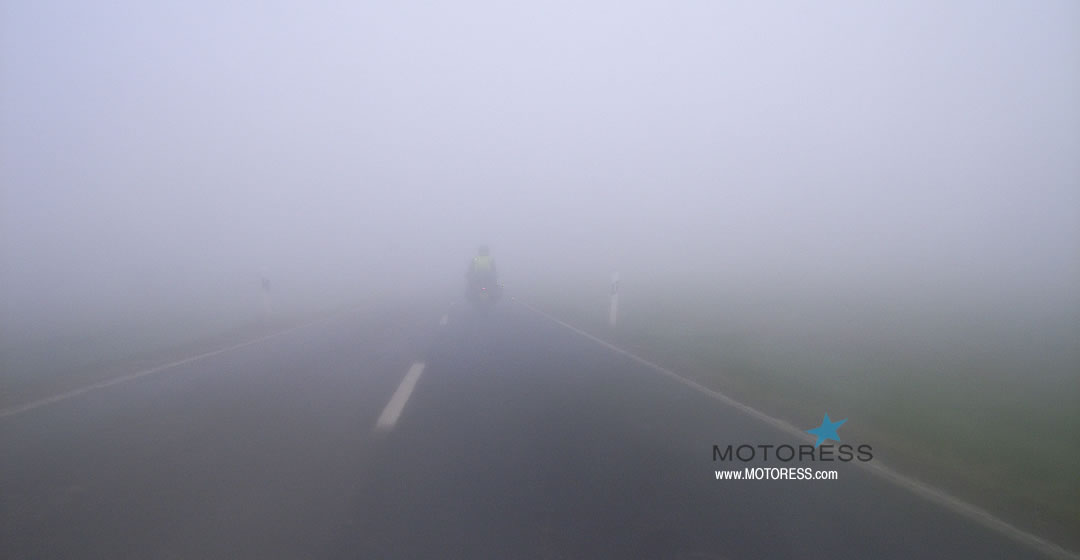
Riding a motorcycle in fog presents a unique challenge, even compared to driving a car. Fog can appear suddenly — around the next corner, or as the road climbs or dips in elevation—turning a routine ride into a test of skill and awareness. When combined with rain or the darkness of night, these conditions amplify the risks. That’s why preparation and a clear understanding of how to navigate fog and mist conditions are essential for staying safe and ensuring you reach your destination with confidence.
Six Key Challenges Riders Face in Fog
In dense fog, the safest choice is often to delay your ride — it’s a high-risk condition that can severely compromise your safety. However, delaying isn’t always possible. If you find yourself riding in fog, these are the key challenges you’ll need to prepare for:
- Road Visibility: Your ability to see potential hazards, both ahead and behind, is significantly reduced. This includes the danger of being rear-ended by faster-moving, or close-following vehicles.
- Sight Impairment: Moisture build-up on your helmet’s face shield or goggles can impair your vision, making it harder to identify road hazards.
- Being Seen: Other motorists will struggle to see you, greatly increasing the risk of accidents.
- Disorientation: Fog can disorient riders by obscuring the road, surroundings, and even the horizon. This raises the chances of missing exits, misjudging corners, not seeing obstacles in the road, or losing your way entirely.
- Roadside Vulnerability: If you need to slow down or pull over, you become highly vulnerable to passing traffic.
- White-out Effect: Sudden changes in fog density, combined with light sources, can create a white-out effect that drastically reduces visibility in an instant.
Strategies For Riding In Fog
Pre-Ride Preparations For Foggy Conditions
- Call ahead to your destination and inform someone of your route and expected time of arrival.
- Ensure your motorcycle has a full tank of gas before departing.
- Choose the most familiar route to your destination.
- Install a Pinlock lens system on your face shield or apply an anti-fogging agent to your visor or goggles/eyewear.
- Clean your mirrors thoroughly, as even minor debris can affect vision.
- Double-check that all strapped-on luggage or cargo is tightly secured.
- Wear a reflective high visibility vest to enhance your visibility.
On-the-Road Strategies For Riding In Fog
- Use your regular headlamp mode. Avoid using high beams, as they reflect off moisture droplets, reducing visibility.
- Pay full attention to your riding—lane position, speed, and surrounding conditions.
- Reduce your speed gradually to suit the conditions, ensuring ample time to react. Fog can make it easy to misjudge your speed.
- Remain calm and relaxed. Sudden movements or panic can lead to mistakes.
- Avoid passing, changing lanes, or crossing traffic whenever possible.
- Use pavement markings on the shoulder or curbside of your lane for guidance; avoid relying on the centreline due to potential glare from oncoming headlights.
- Increase your standard 2-3 second following distance for additional reaction time.
- Watch for electronically operated warning signs along the road.
- Look as far ahead as possible to anticipate hazards.
- Monitor your mirrors for fast-approaching vehicles and prepare for evasive action if necessary.
- If another vehicle is following too closely, tap your rear brake pedal lightly to flash your brake light, or turn on hazard lights if equipped.
- Avoid sudden braking or steering inputs; use engine braking where possible, ensuring your brake light signals any deceleration.
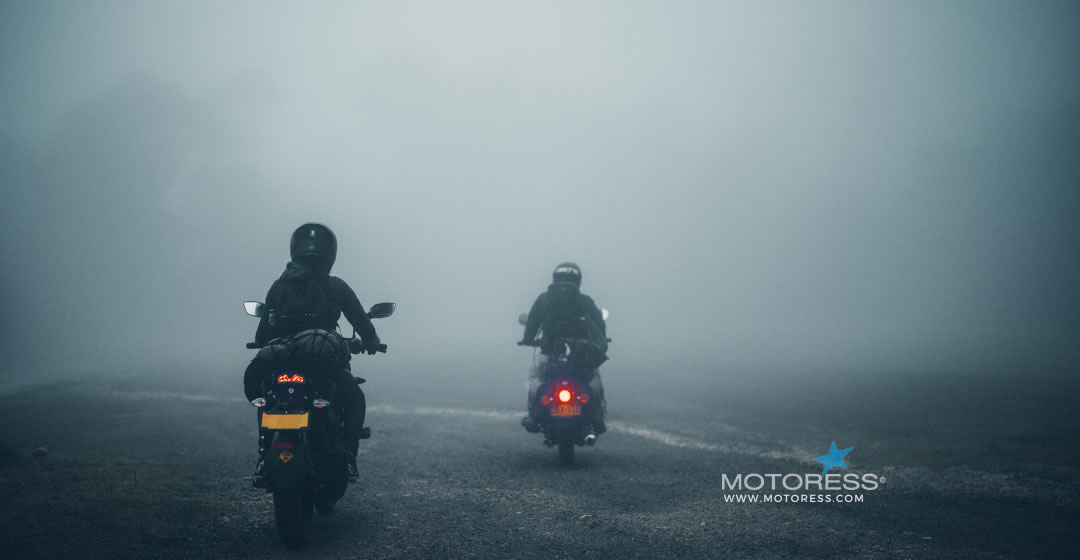
- Follow the tail lights of another vehicle at a safe distance to help maintain orientation, but avoid becoming overly reliant.
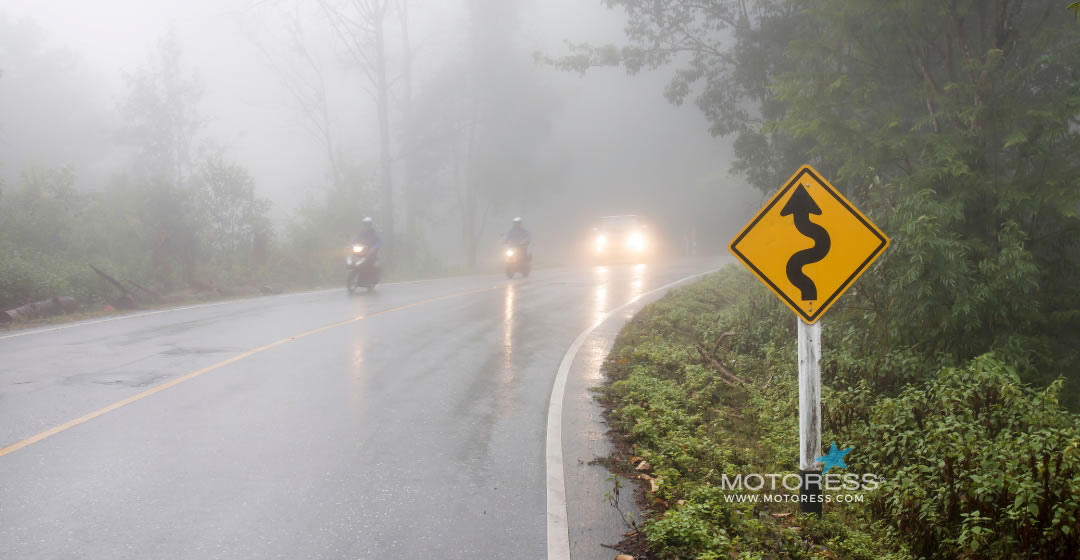
What To Do If Fog Becomes Too Dense
- If forced to stop due to dense fog or a mechanical issue, move well off the road.
- Find a safe parking area and activate your hazard lights if available.
- If it’s unsafe to remain with your motorcycle, move yourself a safe distance away from the road and your bike.
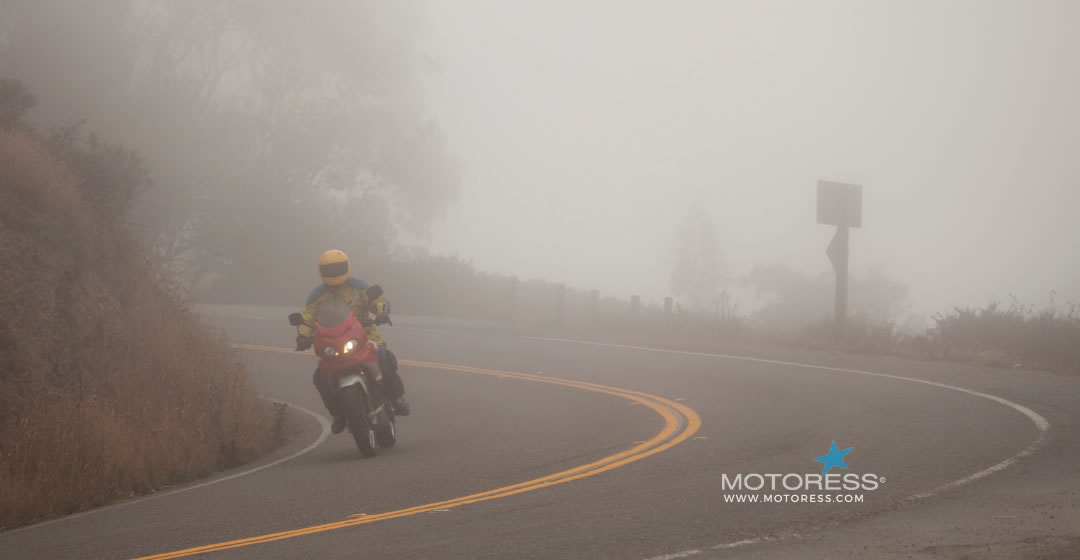
Four Critical Don’ts for Riding in Fog
- Don’t Stop on the Roadway. Never stop on the travelled portion of the road, even if you run out of fuel or experience a mechanical issue. Always move yourself and your motorcycle to the roadside or a safe location immediately to avoid being hit by other vehicles.
- Don’t Accelerate Suddenly Even if the fog seems to be clearing, resist the urge to speed up. Fog can reappear unexpectedly, especially around bends or in low-lying areas, putting you at risk of losing visibility again.
- Don’t Pass Slower Vehicles. Avoid overtaking slower-moving vehicles. Instead, drop back to create space and reduce risk. Passing in foggy conditions is incredibly hazardous due to limited visibility and the unpredictability of oncoming traffic.
- Don’t Tailgate or Try to Escape Tailgaters. If a vehicle is following you too closely, don’t speed up to escape. Instead, signal your intentions, move to the shoulder or a safe area off the road, and allow the vehicle to pass. This ensures your safety and reduces the likelihood of a collision.
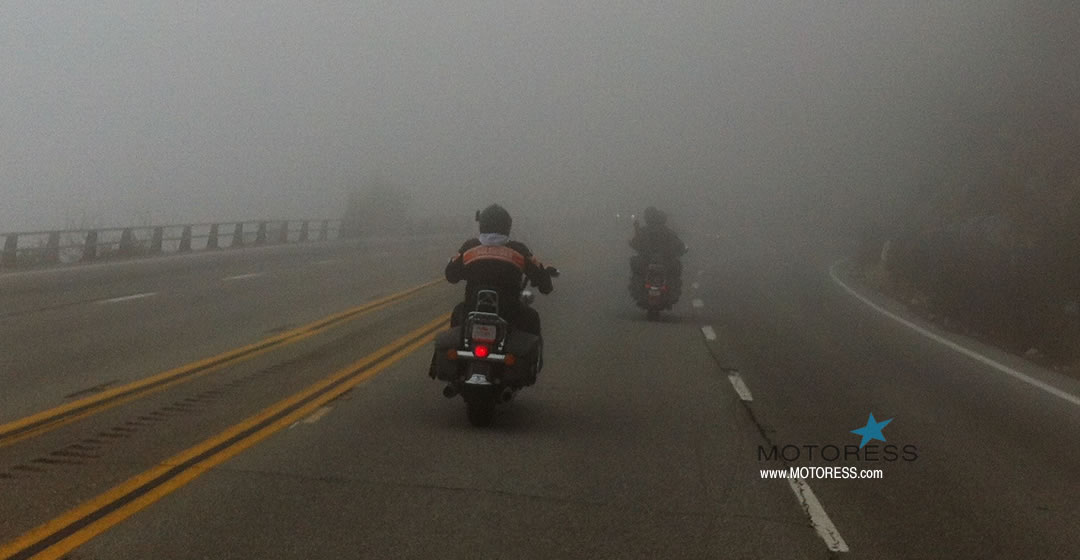
Riding in fog can be one of the most challenging experiences for motorcyclists, but with the right preparation and strategies, you can navigate it safely and confidently. Remember to stay calm, adjust your speed, and prioritise visibility—for yourself and others. If conditions become too dangerous, don’t hesitate to pull off the road and wait it out. Safety always comes first, and taking a little extra care ensures you’ll arrive at your destination ready for your next adventure. Ride safe!