

Last Update: 29 November 2025
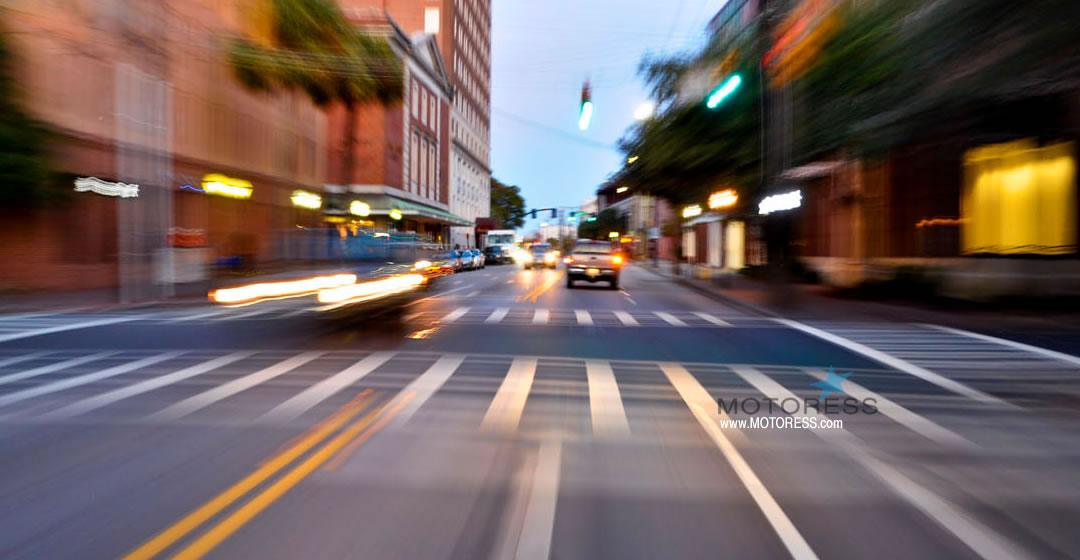
Motion camouflage often leads to motorcycles and their riders seemingly becoming invisible to car drivers in specific situations. Visibility goes beyond wearing reflective gear or having loud exhaust pipes. You may not have been previously informed about the risks associated with something known as “motion camouflage.” It is crucial for motorcycle riders to understand this phenomenon, not only in terms of being noticed by others but also in terms of recognising potential hazards ahead of them.
WHAT IS MOTION CAMOUFLAGE?
Motion camouflage is a dynamic form (dynamic = a force that stimulates change or progress within a system or process) of camouflage in which an object, such as a motorcyclist, can approach a target (e.g., an automobile) while creating the illusion of remaining stationary from the target’s viewpoint. This effect occurs when the approaching object (the motorcyclist) remains on the same line of travel – a constant trajectory – between the target (the vehicle) and some landmark point; causing it to appear as though it is stationary relative to the reference point from the target’s perspective.
It appears to the vehicle that it seems you stay near the landmark point. From the target’s viewpoint (the vehicle or driver), it seems as though the motorcyclist remains near the landmark and isn’t moving independently. The only indication of motion is the motorcyclist’s changing angle and the “looming” effect—their apparent size increasing as they get closer to the target.
A moving object will draw the attention of a driver versus a stationary object. But if you’re riding towards another driver/ vehicle you’ll be out of sight and seemingly “disappear” because you remain on the same spot their field of vision remains. This is “motion camouflage” – camouflage by movement.
MOTION CAMOUFLAGE CAN DISGUISE MOVEMENT
Motion camouflage can disguise the movement of an approaching object. In the animal kingdom this phenomenon is used by predators to sneak up on prey.
Recently biologists confirmed dragonflies use it in their predatory flight paths. When hunting, the dragonfly keeps on a line between a fixed point in the landscape and its prey. If the prey moves, the dragonfly moves with it, keeping the fixed point directly behind it al all times – effectively hiding it from the prey. This works because the outline of the dragonfly remains in the same place against its background, making it hard for the prey to detect its movement. At some point close to the prey, the dragonfly “looms” into view. But it’s too late for the prey by then. Looming – the only visible evidence that the attacker is moving is its “looming”, the change in size as the attacker approaches. Motion is also used in a variety of other camouflage strategies, including swaying to mimic plant movements in the wind or ocean currents.
METHODS TO INCREASE YOUR VISIBILITY
This is the reason why motorcyclists often encounter situations where drivers or vehicles unexpectedly pull out onto the road and then abruptly come to a stop, seemingly frozen in place. These drivers didn’t initially notice the motorcyclist, and when they finally do, it can be a shock. The abrupt change in size as the motorcycle approaches is what captures the driver’s attention. Unfortunately, for the motorcycle rider, this “uncloaking effect” known as looming occurs only when the moving object (the motorcycle) is very close to its target, which in this case is the vehicle that didn’t see the motorcycle approaching.
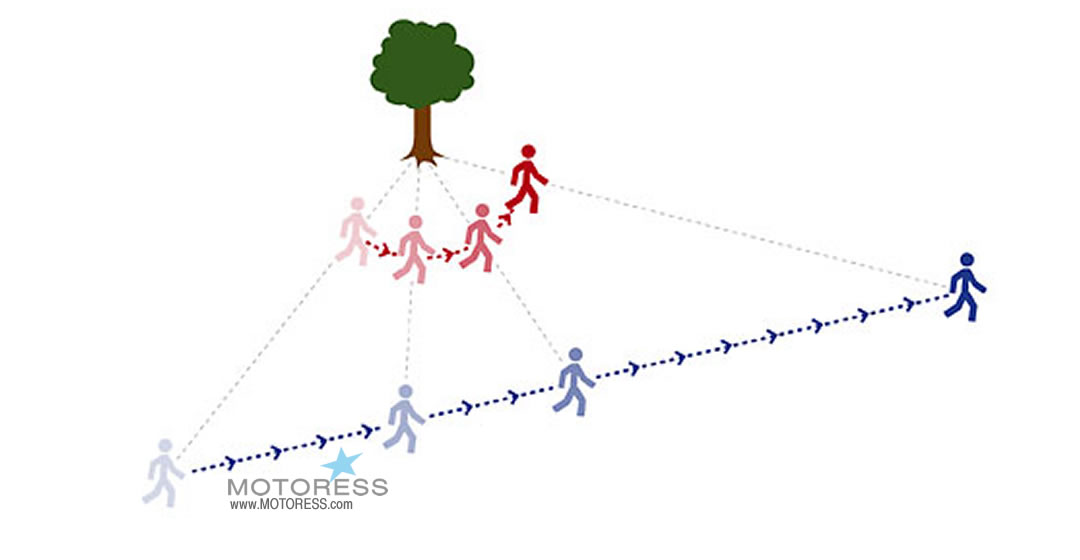
The diagram above provides an excellent illustration of motion camouflage in practice. Despite the red person in the diagram actually moving in the background, from the perspective of the blue person, the path taken by the blue person creates the illusion that the red person remains stationary.
LEVERAGING MOTION CAMOUFLAGE FOR VISIBILITY
Motorcyclists can utilise the concept of motion camouflage to reduce the risk of being overlooked by other drivers. To enhance your visibility on the road, consider these strategies:
- Lane Positioning: Shift within your lane — from the left tire track to the right or vice versa—to create subtle movements that attract attention.
- Lane Changes: On two-lane roads, change lanes when safe and appropriate. The act of switching lanes naturally draws the eye of other drivers.
- Subtle Manoeuvres: Perform small swerves or adjustments within your lane, such as navigating around obstacles like sewer hole covers. These minor shifts mimic motion effects that make you more noticeable, while also honing your steering and emergency avoidance skills.
Quick and deliberate changes in position within your lane can effectively capture the attention of other road users, improving your visibility.
ADJUSTING YOUR DIRECTION OF TRAVEL
When approaching an oncoming vehicle, avoid riding directly toward it. Instead, adjust your direction of travel to gain two key advantages:
- Increased Visual Profile: By altering your direction of travel, you can achieve a larger angle in relation to the approaching vehicle. This ensures that your motorcycle is more prominently presented to the other driver or vehicle. As a result, there’s a greater visible surface area on the front side of the motorcycle, providing the other driver with more “ground” to see it.
- Altered Path: Changing your direction of travel slightly from that of the approaching vehicle means that you cross their field of vision or line of sight, rather than riding directly alongside them on the right. This can be more effective in catching the attention of the other driver, reducing the chances of going unnoticed.
By making these adjustments, you increase your visibility and decrease the likelihood of being overlooked by other vehicles when approaching them on the road.
SCAN AHEAD
Developing the ability to identify hazards camouflaged by motion is a critical skill for motorcyclists. One effective method is scanning — a technique taught in rider training courses that involves keeping your head and eyes in constant motion to maintain situational awareness and detect potential threats.
Let me introduce you to Duncan MacKillop, a fellow respected riding instructor, has highlighted how the concept of motion camouflage applies to motorcycling. He suggests that diverging or deviating from the direct line of sight can disrupt motion camouflage and attract the observer’s attention and make themselves more noticeable to others on the road.
Here’s an example to illustrate this concept: Imagine you’re riding on a road, approaching an intersection where a driver is stopped on a cross-street to your right. This driver is likely scanning left at an angle, assessing traffic before proceeding. If you position yourself to the left within your lane, you will diverge from their direct line of sight, increasing your chances of being noticed. Conversely, if you veer to the right of your lane or change lanes from left to right, you align with the driver’s line of sight. This alignment can mask your motion against the background, making it harder for the driver to perceive your presence.
By understanding and leveraging this principle, you can adopt smarter positioning strategies. Diverging from others’ line of sight can significantly improve your visibility, helping to ensure that other road users are more likely to notice you. Incorporating this practice into your riding technique not only enhances your safety but also builds a heightened sense of road awareness.
MacKillop the recommends: “I observed a smooth, gentle, single, zigzag motion, at any point along the line, created a rapid edge movement against the background and destroyed the motion camouflage. Drivers’ eyes snapped towards me and they froze the movement I swept left to right and back again.”
EXTRA STRATEGIES TO COMBAT MOTION CAMOUFLAGE
Here are a few additional strategies motorcyclists can use to counteract motion camouflage and stay visible to other road users:
-
- Use of High-Visibility Gear
Wearing brightly coloured or reflective clothing and helmets increases your visibility, especially in low-light conditions. Fluorescent gear and reflective strips are particularly effective during dawn, dusk, or nighttime. - Use of Lights
Modulating high beam headlights can be especially effective in catching attention. - Flashing Brake Lights
Tapping your brakes lightly before fully stopping can create a flashing effect that alerts drivers behind you. - Strategic Horn Use
A quick, polite beep can draw attention if you sense a driver might not have noticed you. This is especially useful when entering intersections or if a car appears to drift into your path. - Avoid Blind Spots
Stay out of other vehicles’ blind spots whenever possible. If you must pass through a blind spot, do so quickly and with a clear path ahead. - Eye Contact:
Whenever possible, try to make eye contact with drivers, particularly at intersections or when merging. This ensures they see you and recognise your presence. - Speed Modulation
Vary your speed slightly when approaching intersections or vehicles from behind. The change in speed can break the motion camouflage effect, making your movement more apparent to other road users. - Use of Road Positioning for Contrast
Position yourself against contrasting backgrounds. For example, avoid blending into shadows or aligning with similar-coloured vehicles. Positioning against open sky or bright backgrounds increases visibility. - Avoid Clustering with Other Vehicles
Riding in close proximity to larger vehicles can make you harder to distinguish. Maintain a safe and visible distance from trucks, buses, or other large vehicles. - Signal Early and Clearly
Use your turn signals well in advance of any intended lane change or turn. Combine this with a shoulder check to confirm your intentions are visible to nearby drivers. - Be Predictable:
Avoid sudden, erratic movements that might confuse drivers. While subtle adjustments help with visibility, always ensure your actions are clear and intentional to others on the road.
- Use of High-Visibility Gear
OPTICAL ILLUSIONS & VISUAL PHENOMENA
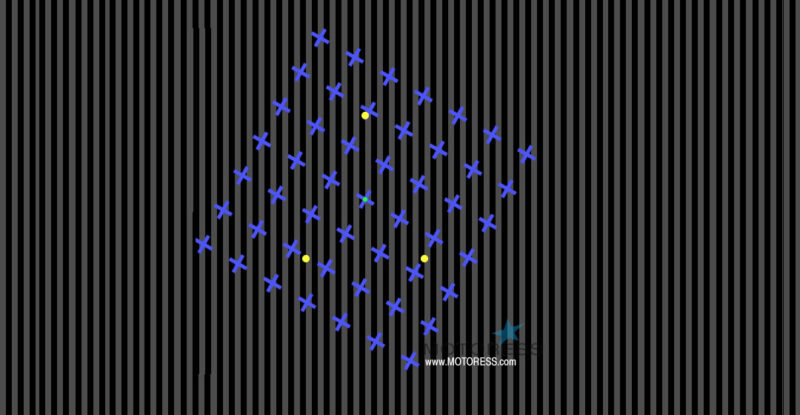
Check out this amazing great example of how motion induced blindness works. This is provided by Prof. Michael Bach PhD, Ophthalmology, University of Freiburg, Germany, from his collection of Optical Illusions & Visual Phenomena!
Notes: Original article published by MOTORESS / 2018