
Last Update: 15 January 2026

Taking a solo long distance motorcycle ride is in its own right, a special way to enjoy a two-wheeled road holiday. And, the adventure starts from the point you begin planning! I’ve always found touring on two-wheels to be an exciting part of any riding adventure because “going the distance” requires so little. Onboard space is limited, yet you’ll need to prepare to cope with diverse weather and road conditions. It’s also physical. Think about the long hours in the seat, of the attention and mental sharpness, and of keeping the throttle on while manoeuvring through various terrains. And whether you head out for a long distance ride for the weekend or for weeks at a time, you’ll enjoy great success if you’re ready.
Yes, You and Your Motorcycle Can!

The fact that “touring motorcycles” exist and are a motorcycle category, leaves many thinking that their motorcycles are not suited for long distances. That is a huge misunderstanding.
You do NOT need to own a touring motorcycle – to tour or enjoy a long distance motorcycle ride.
Indeed, touring motorcycles have many features and benefits which focus on comfort. They’re built to cover huge stretches of expressways ( tend to be larger engines), come with luggage compartments, and passenger areas, sound systems, large fuel tanks, and so forth. However, this type of touring style is not necessary. You do NOT need to own a touring motorcycle to tour. Riding long distance is a adventure that’s truly personal. I’ve ridden long distances throughout Europe, India, and North America – all by way of the motorcycle I owned at the time – my standard street bike. In Europe I toured on my Ducati 900 SSC, on BMW’s, sport-touring bikes and on an Indian Scout Bobber – with no room for cargo!
So, yes you and your motorcycle can and here’s how!
PLAN YOUR ROUTE
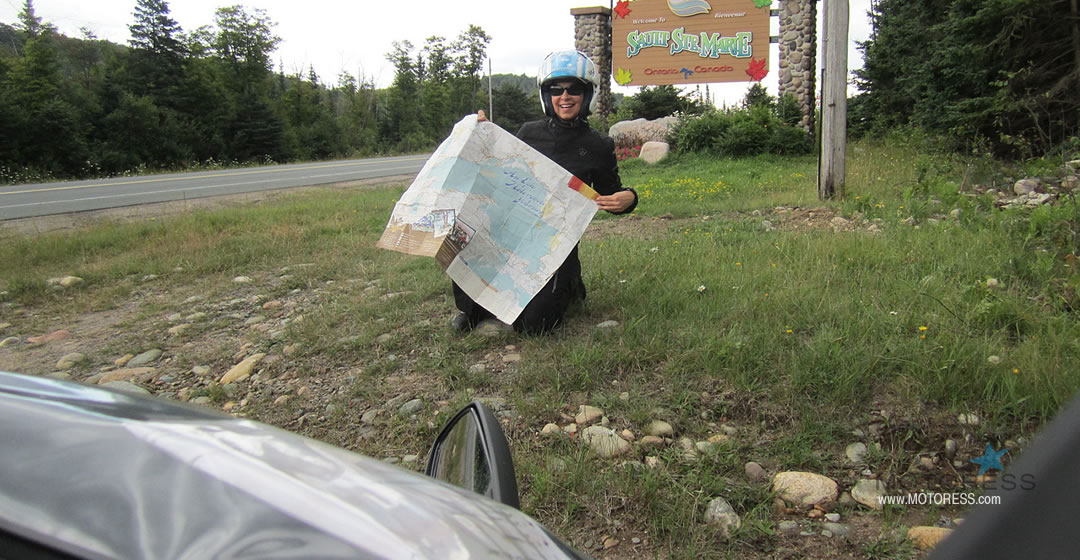
Calculate The Time Allotment. One week riding versus one month calls for different planning. Decide how long you’re going for.
Set Your Limits. If the longest you’ve ridden is a couple hundred kms / miles, don’t jump into 1000 km days on day one. Work up to it and be realistic regarding your destination. Riding while fatigued is dangerous. Plan your routes and distances on the “lighter goal” side.
Expressway or Not? The expressway or motorway is efficient on time and fuel and helps you reach your destination in the fastest manner. This is handy when limited on time. Often, I’ve often taken many expressway routes (the Autobahn from Amsterdam to München Germany for example) as a time management aspect of a ride to arrive at the destination quicker. I then used the secondary roadways on my return.
Shortest Route. Using a motorcycle GPS, you can plan to ride the shortest route to your destination. This again helps on the time management factor. The disadvantage is that you’ll miss the pleasure of planning a route yourself.
What Type of Roads? If you want to cover many kilometres, best not to choose the primary or arterial roads you won’t get far. Some countries have designated routes as an alternative for expressway or motorways which avoid city centres and busy city rings.
Budget. Calculate expenditures based on mileage, fuel prices, food, accommodations, and so forth. And if you are camping along the way, campsite fees.
Manage Fuel Stops. You should know how far you can ride on a full tank of fuel, and with that information, you can plan out your fuel stops ahead of time. Will you find fuel stations along your route? This can be difficult on the rural routes, a disadvantage of not using the freeway routes. In many locations it can be hard to find fuel in smaller towns/ areas after six p.m. at night, or even in some places, on a Sunday. Make it a practise to fill your fuel tank before six o’clock and take care not to push fuel mileage – don’t wait until near empty to refuel.
PREPARE YOUR MOTORCYCLE
Standard Maintenance. Prepare your bike for the trip is essential to spotting things before they happen and making sure all is mechanically ready for the long-distance task. Practical maintenance such as oil change, new tires, basic checks need to be completed. Avoid any significant mechanical changes to your bike just before you leave for a multi-day trip. One thousand kilometres away from the garage is not the ideal place to learn that your latest repair didn’t take.
Upgrade Your Tool Kit. Be sure you have all the basics for small fixes. And don’t forget your tire pressure gauge!
Roadside Service. If you’re staying on your home continent and don’t have a roadside service membership yet, get it. You won’t regret doing so if you ever have a towing or help. There’s nothing fun about being stranded.
GET GEARED
Less Is a Must. There’s little room and items such as clothing can be hand washed, so you won’t need much. Pack only essentials.
Cargo Bags- Luggage- Panniers. Everything you need to know regarding great luggage for your long distance motorcycle ride is here.
Use A Tank Bag. Tank bags are fabulous for the quick grab items and most have a clear map pocket for your backup paper map or to tuck away your smartphone. Here you’ll keep the things that you will need easy access to (tire pressure gauge, snacks, flashlight, eyeglasses) – things you can reach with minimum trouble.
Climate Ready. Ask yourself, will you ride at night? Are you crossing high-mountain ranges (cold)? You’ll need riding gear that will be diverse enough to handle the climate and weather variations.
Rain Suit. If you don’t have one, you’ll need it. And if it gets cold wearing your rain suit over your regular gear offers extra warmth and insulation from the wind. Unless of course you have a BMW Streetguard Suit that is fully waterproof and removable thermal linings.
Tire Repair Kit. These take up little space and work!
Fuel Bottle. A fuel bottle is easy to stow and are super handy. Great for those times where you just can’t find a fuel station. These are easily mounted to your bike as well.
PREP FOR HOURS OF RIDING

Motorcycle Seat. Add an AirHawk cushion – it makes the difference. Use it every second day if you like.
Motorcycle Throttle Assist. Consider buying a motorcycle throttle control holder. This is a cruise assist rest accelerator assistant. An inexpensive plastic device that’ll give your hand a break when riding many long-stop hours. Also known as a “cramp buster” to give your wrist and hand some ease.
New Gear. If you’ve invested in new gear for the ride, be sure to break it in well before you depart.
Consider Adding Highway pegs (cruiser bikes only). These pegs can help you change your stance to get the blood flowing through your legs when they’ve been in the same position for hours. Be sure to instal and test weeks before your departure.
HEARING PROTECTION
Earplugs/ Ear Protection. Sound is fatiguing and it is not the sound of your bike that’s exhausting or damaging, it is the sound of the wind. Ear plugs, disposable or fitted work well – just be sure to wear them.
Full Coverage Helmet. A full-face helmet is quieter than an open face, or half helmet. But even if you would be able to get the minimum of noise, you still would need hearing protection.
Which Hearing Protection? Drugstores sell disposable foam ear plugs. They function, but are hard to keep in your ears. But they are easy to find. A brand such as the EarDial HiFi Earplugs are a better option (huge price difference) but effective and come with a companion mobile app which monitors decibels for you. Many other earplug brands are commonly found at motorcycle shops, and come with filters that take away the damaging tones, but let you still hear your engine and emergency responder vehicles.
SHARE YOUR ITINERARY
Share Your Plans. Make a simple copy of your route on Google Maps with the dates you intend to be at each location. This is a great back up in case things go astray.
GPS Tracking/ APP. There are many GPS tracking applications your loved ones can check in on to locate you. The SPOT tracker is very popular with riders. It has many features and does not require cell phone signals.
ROAMING PHONE PLAN
You’ll need to add a travel package to your smartphone to avoid exceeds charges while riding in other countries.
SPARE MOTORCYCLE KEY
Bring along your spare key but of course store in a safe spot in your tank bag.
LONG DISTANCE MOTORCYCLE RIDE MAINTENANCE
Schedule an on the road maintenance appointment at one of your stops midway through your solo ride trip. Even if your bike isn’t acting up, you can have it looked over to make sure there aren’t any problems waiting to happen. If your road trip is a long one, a scheduled maintenance stop lets you swap out your tires, get an oil change, etc. Schedule it as your midway stopping point.
Tires are a significant concern on an expedition like a long-distance motorcycle ride. As mentioned earlier, make sure your toolkit and repair kit are up-to-date and loaded. Bring along an inflation device like CO2 cartridges (most motorcycle tires require between 1 to 1 1/2 16-gram cartridges) and a pump. Stop and Go Tire Inflation and Repair Kits have a great reputation and many varieties of kits.
REST, FOOD, FUEL, HYDRATION
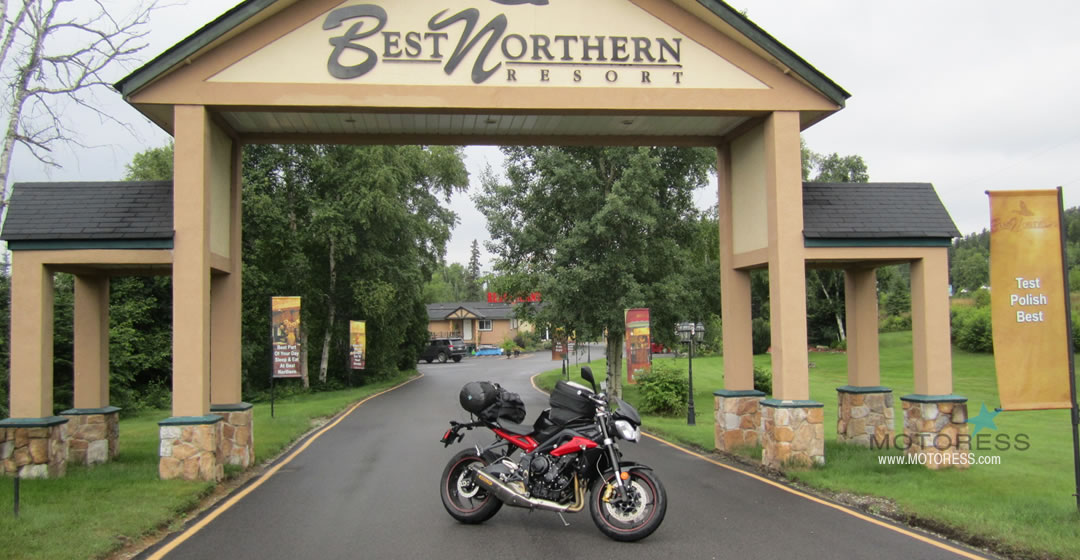
Take Breaks. Make sure you take frequent breaks and well before you get tired. If you feel tired, pull over immediately. Furthermore, stretching your legs from time to time will give you results that’ll help you ride much longer before getting tired. When you find the ideal place for a break, be sure to fully take the time and enjoy it.
Food and Hydration. The best rule is to eat before you get hungry and drink before you get thirsty. Put some energy bars and juice boxes in your tank-bag (buy them before you leave, and when they’re finished, buy them at fuel stations). This way you’ll always have something to refuel yourself with during a rest-break- when you can’t find a shop that’s open. Carry vitamins and aspirin, too. For your main meal at dinnertime, the options depend on your route. Just take into consideration the standard mealtimes in the country you’re travelling in. Maybe best to eat just before these popular times or after.
Accommodations. Generally, you can plan these on the day of your ride. I prefer not making hotel reservations or accommodation commitments (unless I’m attending a date specified event) as this, as might imagine, creates stress. Start seeking accommodation around 3 p.m. in the afternoon each day. This allows you to have the freedom to change your route or spend more time at an interesting destination discovered along the way. On a recent long distance ride, I used the app “Booking.com” with much success.
BE SAFE-ALWAYS!
- Forget about high speeds. Slow and steady wins.
- Avoid Alcohol and Drugs.
- If you’re tired, stop.
- Get into your rain suit before it starts raining.
- Get gas and fuel up before you need it.
- Never ride faster than you can stop.
FINAL THOUGHTS
A solo long-distance ride is the builder of confidence and an unrivalled rider experience. There’s nothing quite like being on the road for days at a time and taking in the freedom, spontaneity, with the adventure it offers.
Even getting lost is an adventure full of discoveries.
You’ll lose track of your usual reality and, any of life’s usual routines or difficulties.
It’s just you, your ride, the open road and if you choose to, other riders. Just go!